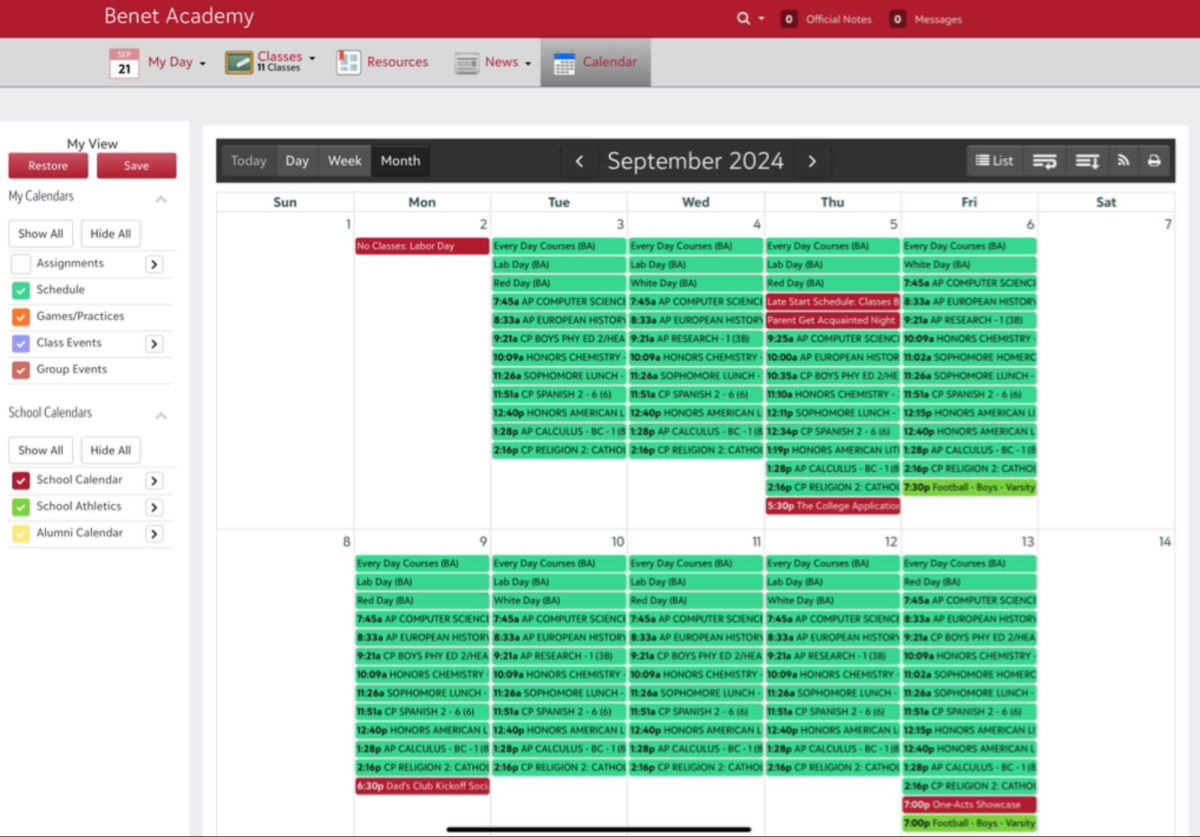



Every Benet student knows the feeling: the bell rings at 2:59PM, sports practice starts immediately, but you have questions for a teacher, you need to attend a club meeting, and somehow do it all by 3:01PM. What if thirty minutes could change all of this about our school? Students juggling sports, clubs, and homework do not need more hours in the day – they just need a designated “activities period” immediately after school.
This 30-minute activity period, just a half hour between the final bell and the start of sports practices, could solve the scramble for every student at Benet. This would allow students to have the opportunity for a dedicated time for extracurriculars and clubs, a chance to meet with teachers to ask questions about class material, or to have downtime with friends after a long day of school. Many other private schools around the country already utilize this useful period, which helps students have a standardized time outside of school for their interests. Pushing sports back 30 minutes also gives students a chance to decompress and relax before immediately jumping into a sport, which can improve mental health and decrease stress.
There would be a multitude of benefits to this period: First, it would promote academic success, since it would give students a chance to obtain teacher or peer tutoring without staying late or arriving early. Teachers also would not have to arrive early to Benet in the mornings either, if this dedicated window were set every day after school. Secondly, students would not have to rush to morning clubs before the school day begins, and having a universal activity period would ensure that there were few conflicting club schedules. This would encourage more students to become involved with extracurriculars in high school, as students might feel stressed by joining a new club or walking in alone as a new member to an organization. This period would permit student organizations to meet when it is most convenient for the entire student body, and when the greatest turnout for a club could be attained. This would give clubs legitimate, school-sponsored time slots instead of clubs scrambling for spaces before school.
For student athletes especially, going straight from classes to practice on an empty stomach and a full homework load is a recipe for burnout. This “buffer” period would help athletes both physically and mentally transition, and even coaches could benefit from the extra time to schedule meetings with players, or have strategy planning sessions. This activity period would show that leaders at Benet value the well-rounded approach for the health of Benet students: it would show that Benet is not just about academics or athletics in isolation, but rather wants a healthy balance for all.
Having a set time every day for extracurricular activities would give students a variety of opportunities to excel in academics, clubs, and leadership opportunities. Just 30 minutes a day of useful enrichment would pave the way for years of success and personal achievement. Studies have already been done to prove how valuable this extra time would be for students. According to Edficiency Studies, schools that already use this activity period, report that there is significant “increased student engagement, as students chose to use time for tutoring, collaboration, and necessary mental health breaks.” The final bell signals the end of the school day, but with this activity period, the bell could signal the start of something that could help all Benet students be more successful.